
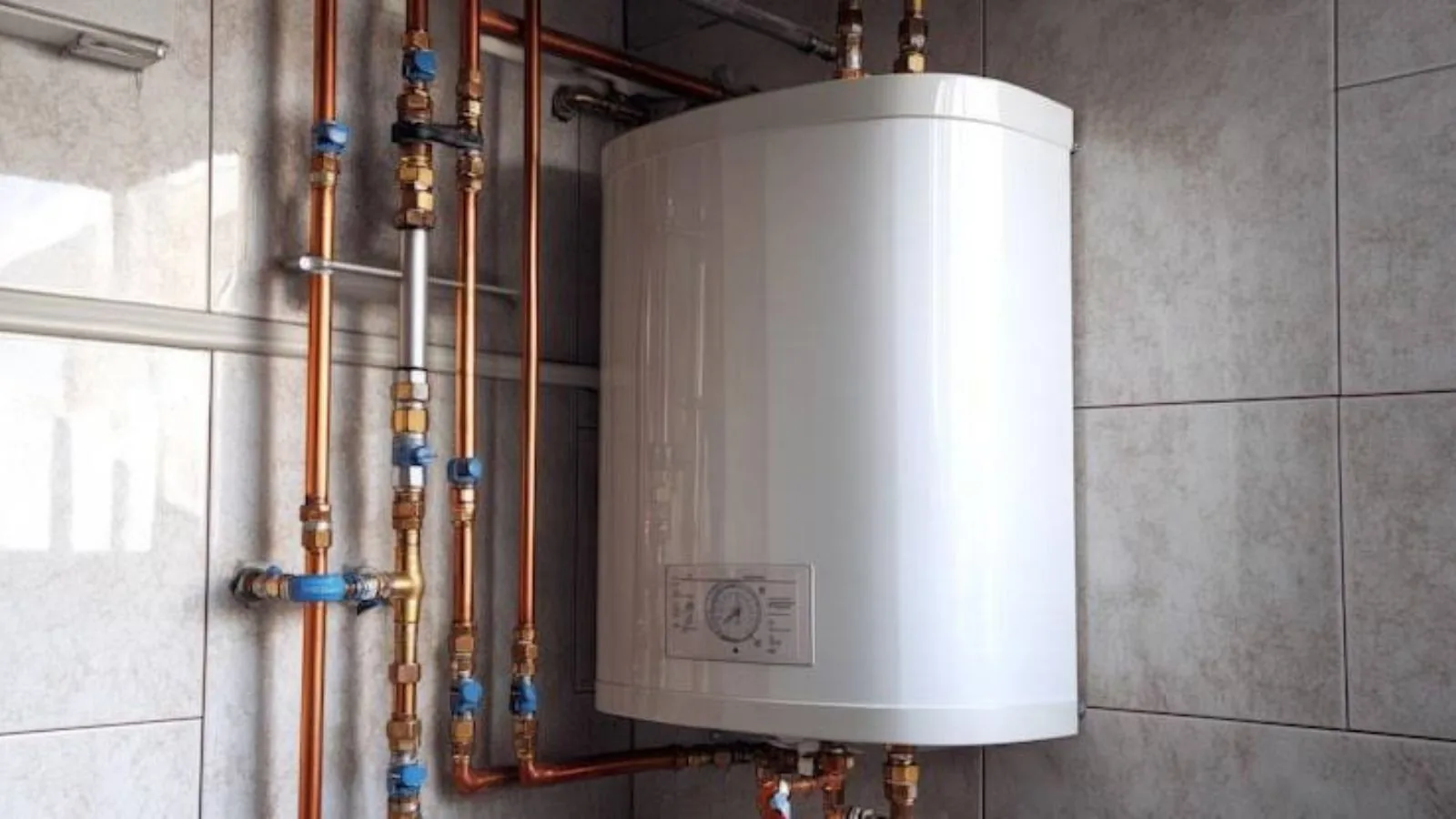
If Water Is Still Spreading From the Tank
Close the cold water supply valve on top of the heater. Turn off the electric breaker for an electric unit or set a gas unit to pilot or off, and do not touch the heater if you are standing in water.
Then call. A tank that has released its water onto a slab floor may look like a small problem, but the water often reaches drywall, baseboards and the room next door.
Why Water Heaters Fail
| Cause | How it shows up | Usual repair |
|---|---|---|
| Tank corrosion or age | Water at the base, steady leak | Replace the heater. |
| Loose fitting or supply line | Drips at the top or side | Plumber tightens or replaces. |
| Relief valve discharge | Water from the discharge pipe | Plumber checks pressure. |
| Sediment and overheating | Rumbling sounds, then leaks | Replace or service. |
A plumber handles the heater. We handle the water on the floor and in the walls, which is the part that causes lasting damage.
Where the Water Goes
A water heater is often in a closet, garage or utility room. Water from the tank spreads across the slab, wicks into the base of walls and slips under flooring in neighboring rooms.
Moisture meters tell us how far it traveled. Drywall that wicked water higher than a few inches usually needs to be opened, and we explain the decision on site. See our wall and drywall page for that process.
Our Cleanup Process
- ExtractWe remove standing water with wet vacuums and pumps.
- InspectMeters and a thermal camera map moisture in walls, flooring and framing.
- DryAir movers and dehumidifiers dry the area until readings are normal.
- DocumentWe record wet materials and what was removed for your claim.
What the Assessment Looks Like
The technician starts at the heater and follows the water outward. Closets and garages often have a slab floor that looks dry quickly, while the bottom of the drywall and the neighboring room hold moisture longer.
Meters and a thermal camera map that spread, and you hear a plain-words explanation of what will be extracted, what will be opened and what can be dried in place. Scope and price are explained before work starts.
Closet, Garage or Attic: Where the Heater Sits Matters
A heater in a garage usually floods concrete, and the main concern is the wall base and anything stored on the floor. A heater in an interior closet may flood carpet, and an attic unit can bring water through the ceiling below.
Tell the dispatcher where the unit is installed, since the layout decides how the extraction and drying are staged.
Neighborhoods with homes of mixed ages, such as Heritage Hills, often see older tanks and newer ones side by side.
What to Do Before a Crew Arrives
These steps keep people safe and limit the loss while you wait. Do only what is safe, and skip any step that means standing in water near power.
- Stop the water at its source if you can reach the shutoff safely, and leave electrical panels alone if the floor around them is wet.
- Keep children and pets out of the wet area, since floors can be slick and standing water may carry contamination.
- Do not walk on a sagging ceiling or run a household vacuum on wet carpet.
- Move small valuables and papers to a dry room, and take photos of the damage before you move anything else.
The vocabulary used here for water categories and drying follows ANSI/IICRC S500, the published industry standard for professional water damage restoration. We name it so you can look it up, and it is a reference standard rather than a certification claim.
What Affects Water Heater Cleanup Cost
Tank size and runtime
A full 50-gallon tank releases more than a slow drip.
Flooring
Hard floors dry differently from carpet or laminate.
Room layout
A closet leak that reached a hallway doubles the work.
How long it leaked
A slow leak found late means more hidden moisture.
Insurance note
Sudden tank failure is often covered, but damage from a long-neglected leak may not be. Photograph the heater's age label and the damage, and keep the replacement receipt.
We serve every Claremore ZIP code, including 74017, 74018 and 74019. If the heater sits near an air handler, our AC leak page explains how condensate leaks differ.
Frequently Asked Questions
Do you handle water heater leak emergencies at night or on weekends in Claremore?
Yes. The line at (918) 306-8113 is answered 24 hours a day, including nights, weekends and holidays. The dispatcher will tell you what to do while you wait.
Should I turn off the water heater after a leak?
Yes. Turn off the cold supply valve and the power or gas, but only if you can reach them safely and are not standing in water.
Do I need a plumber too?
Yes. A plumber repairs or replaces the heater. We deal with the water damage.
Will insurance cover the heater itself?
Policies usually cover the resulting water damage if the failure was sudden, but often not the heater. Check your policy.
How long does drying take after a water heater leak?
Often several days, depending on how far the water spread and which materials got wet.