
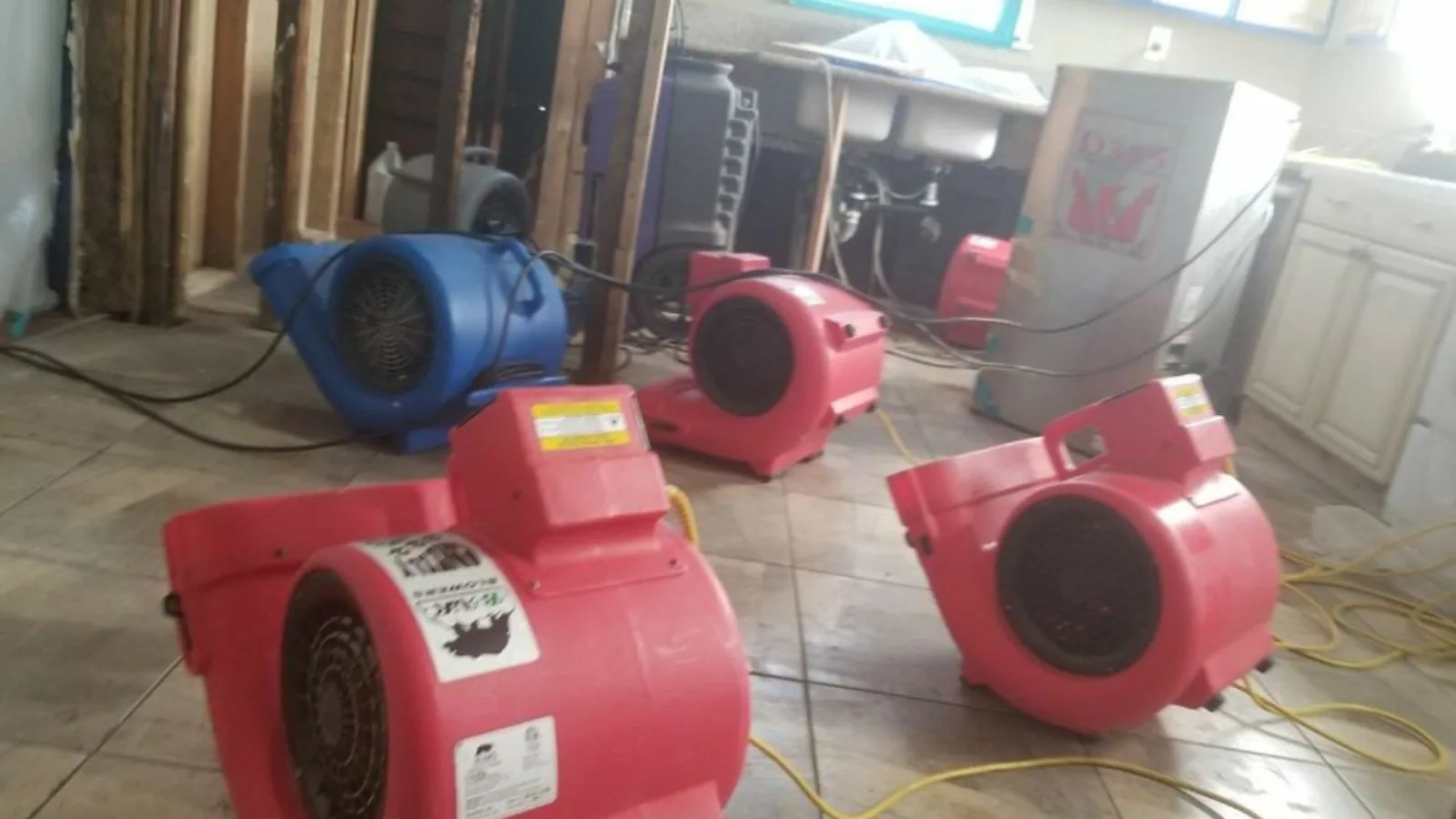
What Water Does to Drywall
Drywall is gypsum between paper, and when it gets wet the paper softens, the gypsum crumbles and the wall can sag or bubble. Baseboards swell and paint peels, which is often the first thing you see.
The surface may dry within a day, but the cavity and framing behind it can stay wet.
Signs of Wall Water Damage
Bubbling or peeling paint
Moisture is pushing the finish off the wall.
Stains or tide lines
Brown rings mark where water has traveled.
Soft or swollen baseboard
Wood trim swells when wet.
Musty smell
A damp odor suggests moisture inside the wall.
Dry in Place or Cut Out
| Condition | Typical decision | Why |
|---|---|---|
| Clean water, wet briefly | Dry in place | Drywall can recover. |
| Sagging or crumbling | Cut out and replace | Structure is lost. |
| Wet insulation behind | Open, remove insulation, dry cavity | Insulation holds water. |
| Contaminated water | Remove | Cannot be reliably cleaned. |
A technician uses a moisture meter and thermal camera to decide. Cutting is limited to what readings justify, and we explain the cut before it is made.
How We Handle Wall Damage
- Locate the sourceWe confirm the water has been stopped.
- Map moistureWe measure walls, baseboards and framing.
- Open and dryBaseboards come off and small holes or flood cuts expose wet cavities.
- DocumentWe record readings and what was removed for repair.
Water in a wall often traces back to a pipe, and our burst pipe page explains that source. For wet ceilings, see our ceiling page.
What an Assessment Looks Like
The technician scans the wall with a thermal camera, then checks the drywall, baseboard and any accessible cavity with a meter. This shows whether the water is surface only or inside.
You hear in plain words which sections can stay and which will be opened. Scope and price are explained before work begins.
Baseboards, Corners and Behind Furniture
Water collects at the bottom of a wall, so baseboards and corners are the first to show it. Wet drywall behind a sofa or bed can go unnoticed for weeks.
Tell the technician about any furniture against the wall, because moving it reveals damage you could not see. A small stain at the base of a wall often means a larger wet area above it.
Water Damage Repair: Walls Are Only One Surface
Many callers search for water damage repair and expect one job. In practice it is a sequence. Drying comes first, then removal of anything that cannot recover, then rebuilding, and the rebuild is usually done by a repair contractor rather than the drying crew.
What we hand over is the groundwork. A list of what was opened, photographs of the cavity and moisture readings showing when it was dry let a contractor close the wall with confidence. Without those, a patched wall can hide a damp cavity.
If a roof leak caused the stain, the roofer comes first. Painting before the source is fixed only buys a few weeks, and the stain comes back through the new coat.
Sheetrock, Plaster and Paneling
Most homes have standard drywall, which some people call sheetrock, and it is the easiest of the three to dry or replace. Older plaster walls hold water differently and may need a slower approach, and paneling can warp at the seams.
Tell the technician what the wall is made of if you know. If you do not, a meter and a close look will tell us, and we will explain the plan before cutting anything.
Wet or bubbling drywall?
Call the 24/7 line and describe how far the stain reaches. The scope and price are explained before any cutting starts.
What to Do Before a Crew Arrives
These steps keep people safe and limit the loss while you wait. Do only what is safe, and skip any step that means standing in water near power.
- Stop the water at its source if you can reach the shutoff safely, and leave electrical panels alone if the floor around them is wet.
- Keep children and pets out of the wet area, since floors can be slick and standing water may carry contamination.
- Do not walk on a sagging ceiling or run a household vacuum on wet carpet.
- Move small valuables and papers to a dry room, and take photos of the damage before you move anything else.
What Affects Wall Repair Cost
Wall area
More wet wall means more drying or replacement.
Insulation
Wet insulation adds removal.
Trim and paint
Baseboards and finish are repair items.
Texture
Matching texture adds labor.
Insurance note
Sudden water damage to walls is often covered, while long-term seepage often is not. Photograph the damage and keep records.
We serve all Claremore ZIP codes, including 74017, 74018 and 74019.
Frequently Asked Questions
Can wet drywall be dried instead of replaced?
Yes, if it was clean water and hasn't crumbled or sagged. Readings decide.
Why take off baseboards?
Water collects behind them, and removing them lets air dry the wall bottom.
Can I just paint over the stain?
Not until the source is fixed and the wall is dry, or the stain returns.
Do you rebuild and paint?
We dry and document. A repair contractor can rebuild and finish.