
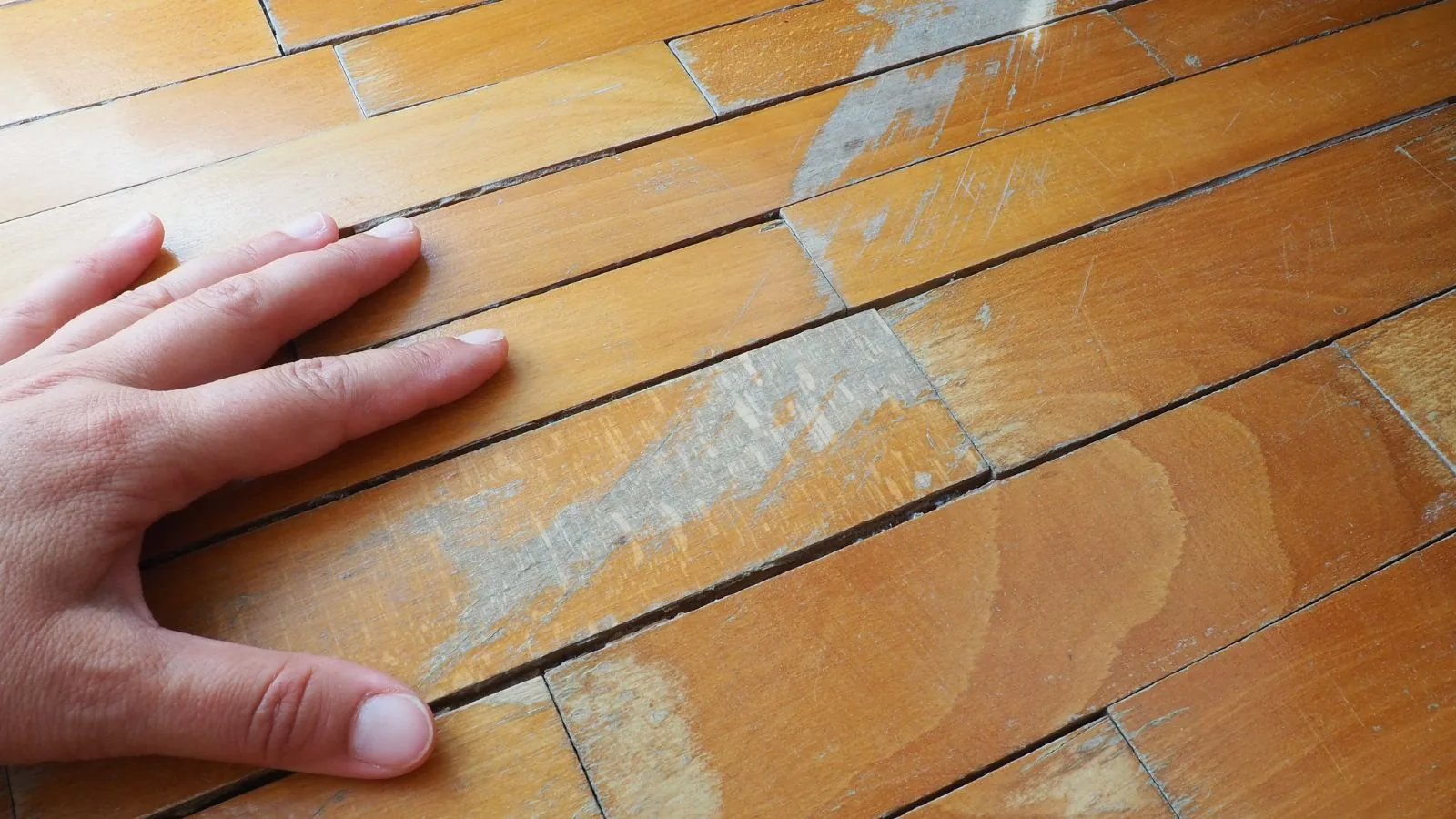
What Water Does to Hardwood
Wood absorbs water and expands. When the bottom of a board takes on more moisture than the top, the edges rise, which is called cupping, and when the whole floor swells it can lift off the subfloor.
Cupping is often the first visible sign, and it can appear a few days after a leak, even after the surface feels dry.
Common Causes
Washer valve or hose break
Water runs under the boards from the laundry room.
Dishwasher and refrigerator lines
Slow leaks seep under the kitchen floor.
AC condensate overflow
Repeated drips near an air handler warp nearby boards.
Plumbing above
Ceiling leaks land on the floor below.
If an air conditioner line is to blame, our AC leak page explains how condensate leaks happen.
Drying Versus Replacing
| Condition | Typical path | Notes |
|---|---|---|
| Light cupping, caught early | Dry and monitor | Boards may flatten as they dry. |
| Cupping with finish intact | Dry, then evaluate sanding | Wait until readings are normal. |
| Buckled or lifted boards | Often replace sections | Subfloor is checked. |
| Dark staining or black water | Usually replace | Cleaning may not be enough. |
Do not sand or refinish until the wood is dry. Sanding wet cupped boards can cause flatness problems later, and moisture trapped under new finish causes more damage.
How We Dry Hardwood
- Find the moistureMeters check the boards and subfloor.
- Set special dryingMats and low-profile air movers draw moisture from the boards.
- DehumidifyDehumidifiers keep the room dry.
- MonitorWe record readings until they match unaffected areas.
Drying wood is gradual, and speeding it can crack boards. Our structural drying page explains the equipment.
Cupping From an HVAC Condensate Leak
A condensation line that leaks near an air handler is a classic cause of hardwood damage. The water is slow and quiet, so the boards cup along the wall before anyone connects it to the unit.
After the line is cleared, the floor has to be dried gradually. Rushing it can crack the boards, so the technician sets mats and monitors readings until the wood matches an unaffected area.
What an Assessment Looks Like
The technician checks the boards, the gaps between them and the subfloor with a meter. If the floor is glued or nailed down, that affects how it can be dried.
You hear in plain words whether drying is likely to work, and scope and price are explained before work begins. We will not promise that every board can be saved, because moisture readings decide it.
After a Washer Valve Break
A washer valve that fails can flood a laundry room and run under the hardwood in the hall. Extraction comes first, then the boards are dried, and the cupping that follows a few days later is monitored.
Engineered Wood, Laminate and Vinyl Plank
Not every wood-look floor behaves like solid hardwood. Engineered wood has a plywood core that can delaminate, laminate has a fiberboard core that swells and does not recover, and vinyl plank is generally water resistant but can trap water underneath.
Tell the technician what you have. If the label is gone, a close look at the edge of a board usually tells us, and the plan changes with the material.
Be cautious about promises that a swollen laminate floor will flatten again. It often will not, and an honest assessment saves you from paying for drying that cannot help.
Cupping or lifting boards?
Call the 24/7 line and tell the dispatcher when the floor got wet. We explain what drying can save before work begins.
What to Do Before a Crew Arrives
These steps keep people safe and limit the loss while you wait. Do only what is safe, and skip any step that means standing in water near power.
- Stop the water at its source if you can reach the shutoff safely, and leave electrical panels alone if the floor around them is wet.
- Keep children and pets out of the wet area, since floors can be slick and standing water may carry contamination.
- Do not walk on a sagging ceiling or run a household vacuum on wet carpet.
- Move small valuables and papers to a dry room, and take photos of the damage before you move anything else.
The vocabulary used here for water categories and drying follows ANSI/IICRC S500, the published industry standard for professional water damage restoration. We name it so you can look it up, and it is a reference standard rather than a certification claim.
What Affects Hardwood Repair Cost
Square footage
Larger floors take more equipment and time.
Board type
Solid and engineered wood react differently.
Subfloor
A wet subfloor adds drying time.
Refinish needs
Sanding and finishing are separate repair work.
Insurance note
Sudden leaks are often covered, including some flooring. Slow leaks often are not, so photograph the cupping and note when you first saw it.
We serve all Claremore ZIP codes, including 74017, 74018 and 74019.
Frequently Asked Questions
Will cupped hardwood flatten again?
Sometimes, if it is dried gradually and the damage is mild. Severe cupping or buckling may need replacement.
Can I sand the floor right away?
No. Wait until moisture readings are normal, or the wood can warp or trap moisture.
Is laminate treated the same way?
Not exactly. Laminate swells when wet and often cannot be dried back. The technician will assess it.
How long does hardwood take to dry?
Often a week or more, depending on thickness and humidity.