
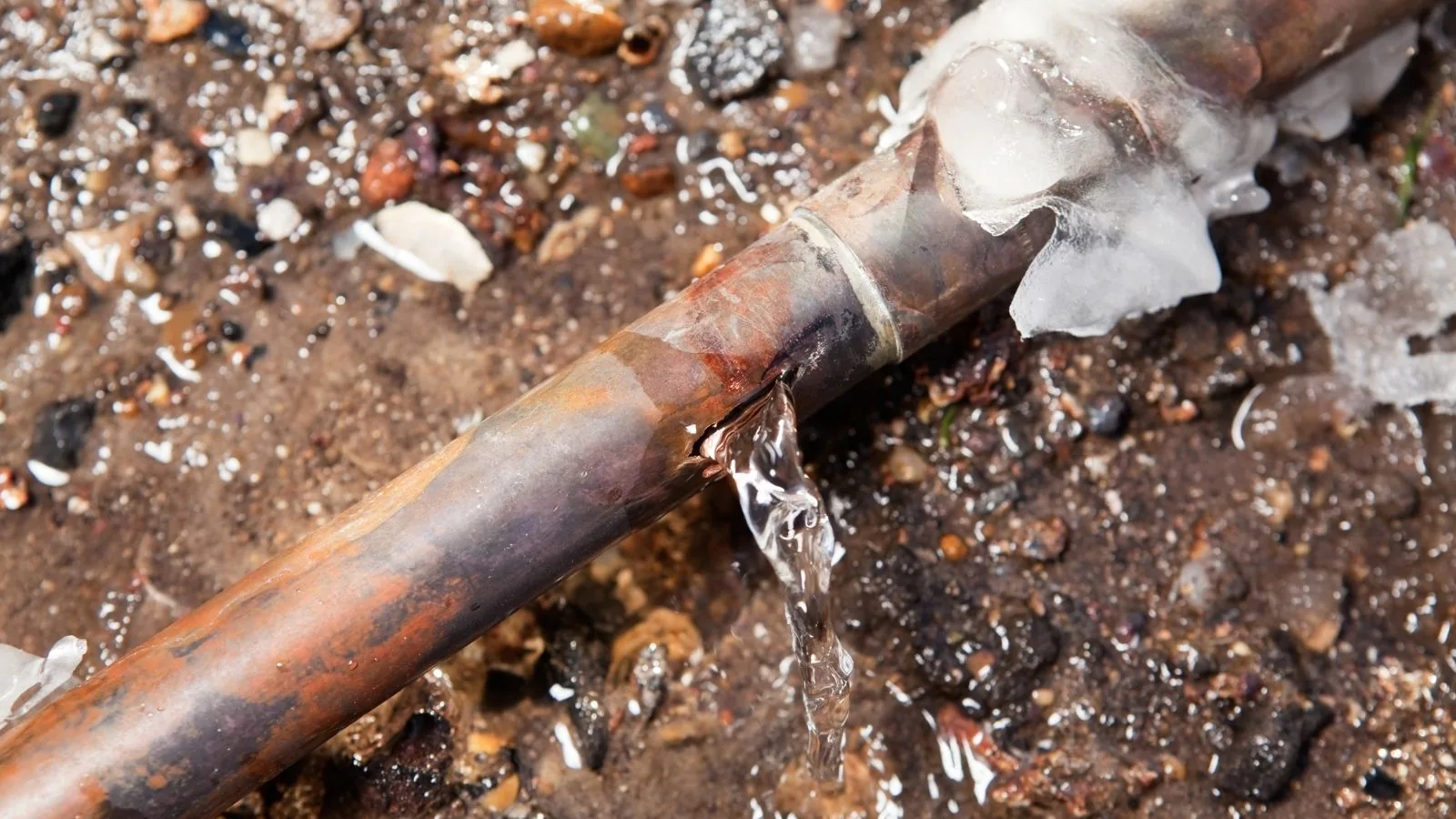
What To Do in the First Minutes
Find the main shutoff valve and close it. Then open a faucet at the lowest point of the house to drain what is left in the lines, and if water is near outlets or the electrical panel, leave the power alone and call for help.
The faster the supply is off, the less water reaches the floors below, and that single step often decides how large the repair becomes.
Know the valve
Many homes have the main shutoff near the water meter or where the line enters the house. Find it before you need it.
Photograph first
Capture the burst, the wet areas and damaged belongings before moving anything.
Lift what you can
Move rugs, small furniture and electronics out of the wet area, only if it is safe.
Skip the ceiling
Do not walk under a bulging ceiling. Trapped water can bring the drywall down.
Where Burst Pipe Water Goes
Water from a split line follows gravity and the path of least resistance. A pipe in an upstairs wall can soak the cavity, drip through the ceiling below and run along floor joists to a room you would never suspect.
That is why we use moisture meters and a thermal camera to map the wet area rather than trusting what the surface shows. The map decides which drywall can be dried in place and which sections need to be opened.
How We Handle a Burst Pipe Loss
- Confirm the supply is off and the source is isolated.
- Remove standing water with pumps and extractors.
- Open wall or ceiling sections where moisture readings show trapped water.
- Set air movers and dehumidifiers, and record moisture readings each visit.
- Document what was removed and what can stay, so the repair scope is clear.
A licensed plumber repairs the pipe itself. We handle the water, and we can work alongside your plumber so the wall is not closed up before it is dry. See our structural drying service for how that stage works.
Which Pipe Failed Matters
| Source | Water type | Typical concern |
|---|---|---|
| Supply line, copper or PEX | Clean water at first | Fast spread through walls and ceilings. |
| Hot water line | Clean water, steam and heat | Warm wet drywall and damp insulation. |
| Drain or waste line | Gray or contaminated water | Disposal and sanitizing of affected materials. |
Clean water can turn gray if it sits for a day or two, so a supply-line burst found late may need more cautious handling than one caught at once.
Burst Pipe Scenarios We Hear About
A split line under a kitchen sink is one of the most common burst-pipe calls. The cabinet fills first, then water spills onto the floor and soaks the toe kick, so extraction and cabinet-base drying happen together.
The larger and rarer call is a whole-house flood from a failed line in an attic or upper wall. Water runs through ceilings on every level below, and the plan focuses on stopping the spread, extracting floor by floor and opening cavities where readings show trapped water.
What an Assessment Looks Like
The technician starts by finding the wet area, usually with a meter and thermal camera, then explains what that means for your walls, ceilings and floors. You hear the scope and how the price is set before the work begins.
If your policy is involved, the same walk-through produces photographs and moisture readings that your adjuster can review. Ask for copies, because they are your records too.
The vocabulary used here for water categories and drying follows ANSI/IICRC S500, the published industry standard for professional water damage restoration. We name it so you can look it up, and it is a reference standard rather than a certification claim.
What Affects Burst Pipe Cleanup Cost
Hours the water ran
A line that flowed all night soaks far more material than one caught in minutes.
Number of floors affected
Water that traveled through a ceiling adds rooms to the scope.
Materials involved
Hardwood, carpet pad and insulation behave differently when wet.
Wall and ceiling access
Opening and drying cavities takes more labor than surface extraction.
Insurance note
A pipe that bursts suddenly is the kind of loss many homeowners policies cover, while damage from a long slow drip often is not. Call your agent early, keep photos, and ask what documentation your carrier wants.
We serve every Claremore ZIP code, including 74017, 74018 and 74019, and if the pipe failed during a cold night, our frozen pipe page covers what freezing does differently.
Pipe split and water running?
Call the dispatch line now and shut off the main valve while we talk.
Frequently Asked Questions
Do you handle burst pipe emergencies at night or on weekends in Claremore?
Yes. The line at (918) 306-8113 is answered 24 hours a day, including nights, weekends and holidays. The dispatcher will tell you what to do while you wait.
Do I need to cut the power after a burst pipe?
If water has reached outlets, switches or the panel, power should be shut off, but only from a dry spot. If you cannot do that safely, leave it and call the dispatcher or an electrician.
Will you repair the pipe too?
We handle the water removal and drying. A licensed plumber should repair or replace the pipe, and we coordinate timing so walls are not closed before they are dry.
How long does drying take after a burst pipe?
Several days is common, but moisture readings decide. Wet cavities and subfloors dry more slowly than surfaces.
Should I wait for my adjuster before cleanup starts?
No. Stop the water and begin mitigation right away, because delay increases damage. Take photos and keep records so your adjuster can see what happened.