
Walls Still Wet and Floors Still Damp After the Water Is Gone?
That is the sign that water remains inside materials, even after a mop or wet vacuum. The trade term is structural drying, and it covers the equipment and readings used to dry wet framing, drywall and subfloor.
Drying matters because damp materials that stay wet can warp, swell and develop odor, which is why water mitigation focuses on reaching a dry standard.
What Structural Drying Is
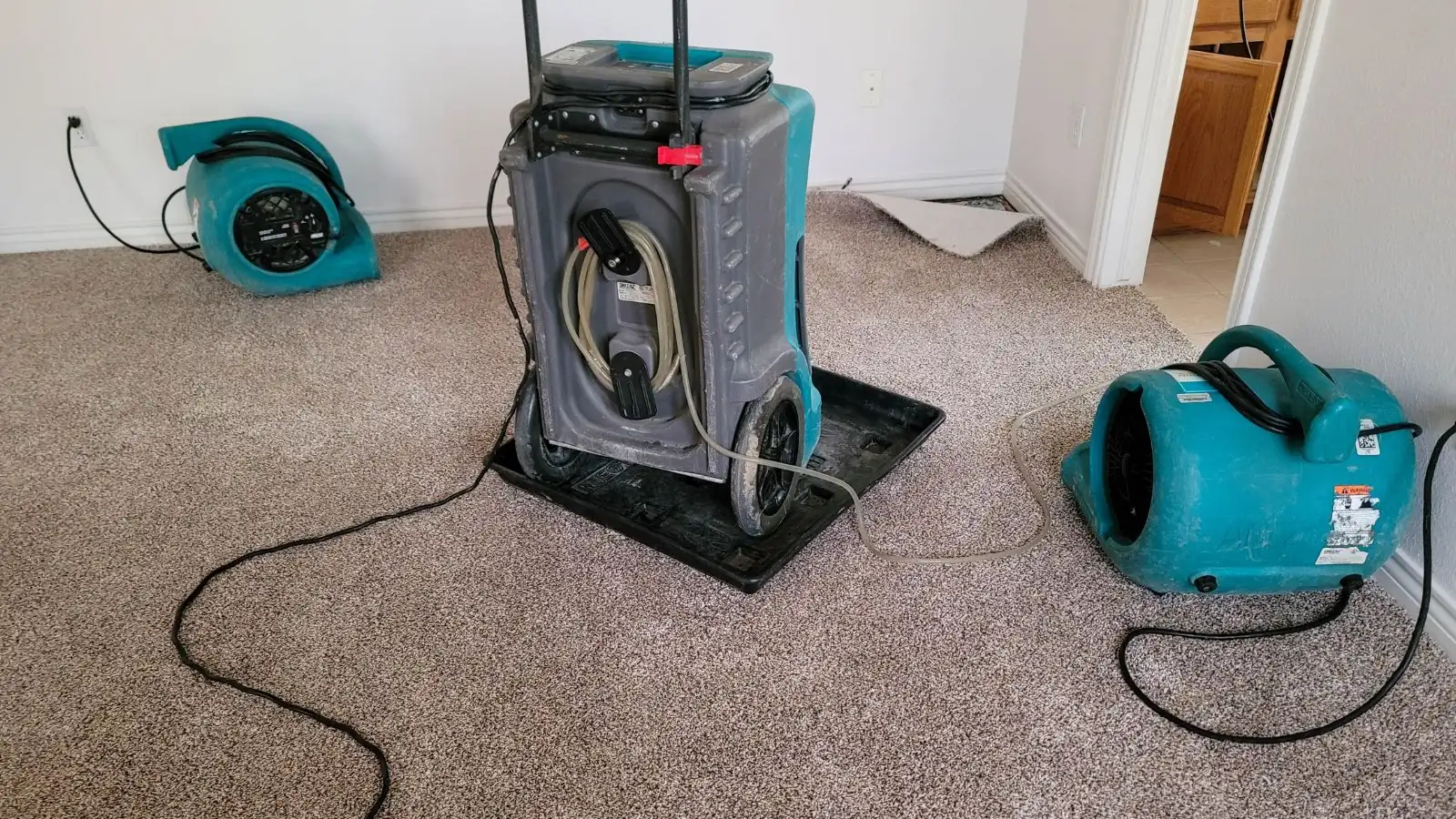
Structural drying uses air movers to push air across wet surfaces and dehumidifiers to pull moisture out of that air. The combination dries the building from the inside.
Moisture meters and a thermal camera map where water is, and daily readings show how drying is progressing. The calendar does not decide when it is done. The readings do.
Equipment and What It Does
| Equipment | Job | Notes |
|---|---|---|
| Air movers | Move air across wet surfaces | Placed along walls and floors. |
| Dehumidifiers | Remove moisture from the air | Sized to the volume of the space. |
| Moisture meters | Measure moisture in materials | Used on each visit. |
| Thermal camera | Reveal damp areas behind surfaces | Guides where to open walls. |
Renting loose equipment is not what we offer. We set it, monitor it and remove it when readings reach the drying goal.
Water Mitigation as a Plan
Water mitigation means acting to stop damage from spreading, which includes stopping the source, removing water and drying the structure. It is the plan behind drying, and it is different from repair.
A mitigation record shows what was wet, how drying was done and what the readings were, which helps when your insurer reviews the claim. Our water extraction page covers the first stage.
How Drying Is Done
- MapMeters and a thermal camera locate wet materials.
- Set equipmentAir movers and dehumidifiers are placed for the space.
- MonitorReadings are recorded each visit.
- FinishEquipment is removed when readings reach the drying goal.
How Long It Takes
Drying commonly takes several days. Thick materials such as hardwood, subfloor and framing dry more slowly than drywall, and a humid day slows the whole process.
Opening walls or lifting baseboards can speed drying where water is trapped, and the technician explains why before any cut is made.
What an Assessment Looks Like
Before any equipment goes in, the technician surveys the space with a meter and a thermal camera. Readings are taken in several places on each wet surface, and those numbers become the starting point.
You hear the plan in plain words, including how many machines the room needs and how long drying may take. Scope and price are explained before work begins.
Large Losses and Vacant Homes
Some of the biggest losses happen in houses nobody is living in, such as a vacant rental or a home between owners. A supply line can run for days, and the damage is spread across several rooms by the time anyone sees it.
Those jobs need a careful record for the insurer, because the owner was not there to see it start. Moisture maps, photographs and daily readings tell the story that a witness cannot.
Humidity in an Oklahoma Home
Oklahoma summers are humid, and a wet house in July dries more slowly than one in a dry winter. Dehumidifiers matter more when the air outside holds a lot of moisture.
If drying seems slow, ask the technician about the humidity inside the house. It is one of the numbers we track along with material moisture.
Need drying equipment placed?
Call the 24/7 line and tell the dispatcher which rooms are wet. We explain the drying plan before equipment is set.
What to Do Before a Crew Arrives
These steps keep people safe and limit the loss while you wait. Do only what is safe, and skip any step that means standing in water near power.
- Stop the water at its source if you can reach the shutoff safely, and leave electrical panels alone if the floor around them is wet.
- Keep children and pets out of the wet area, since floors can be slick and standing water may carry contamination.
- Do not walk on a sagging ceiling or run a household vacuum on wet carpet.
- Move small valuables and papers to a dry room, and take photos of the damage before you move anything else.
What Affects Structural Drying Cost
Space volume
More cubic feet need more dehumidification.
Material thickness
Thick materials take longer to dry.
Equipment days
More days of equipment raise the total.
Access
Trapped cavities may need to be opened.
Insurance note
Insurers often ask for drying logs and moisture readings. We keep them for you so the claim has a clear record.
We serve all Claremore ZIP codes, including 74017, 74018 and 74019, and our kitchen water damage page shows how drying is applied to a specific room.
Frequently Asked Questions
How do I know my house is dry after water damage?
Moisture meter readings compared to a dry reference tell you. Feel alone is not reliable.
Why do I need dehumidifiers, not just fans?
Fans move air, but dehumidifiers remove the moisture from it. Without that, humidity stays high and materials dry slowly.
How long do the machines run?
Often several days, until readings reach the drying goal.
Can I rent the equipment and do it myself?
We do not rent equipment. For anything beyond a small spill, measured drying by a crew is more reliable.