
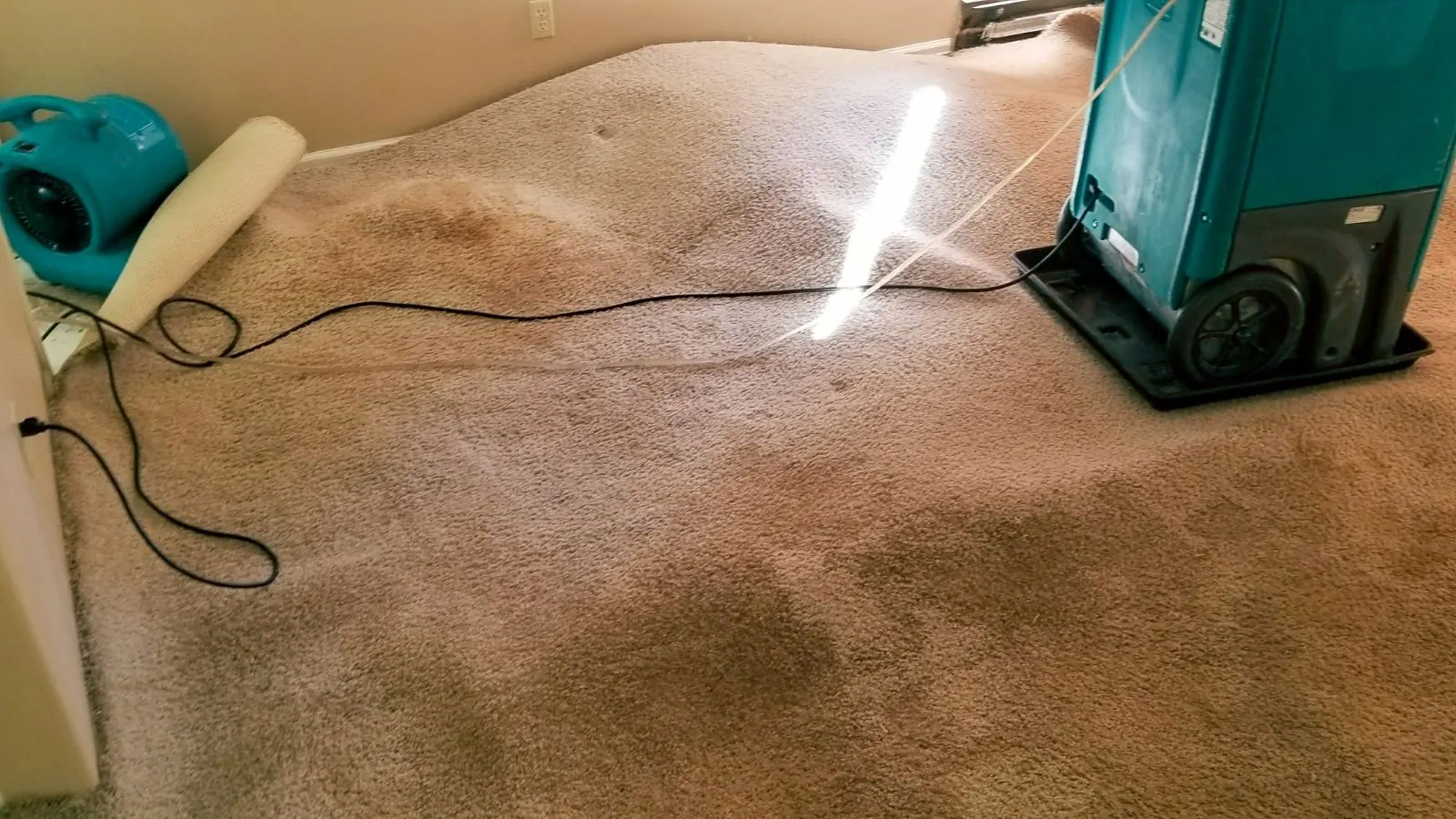
Can Wet Carpet Be Saved?
The answer depends on the water category and how long the carpet stayed wet. Carpet soaked by clean water, such as a supply line, can often be dried in place, while carpet touched by sewage or flood water is usually removed.
The pad underneath is the weak point, because it holds water and dries slowly.
What We Check First
Water category
Clean, gray or black water decides if carpet can stay.
Time wet
Carpet that has been wet longer than a day or two is harder to save.
Pad condition
Pad is often removed even when carpet stays.
Subfloor moisture
A wet subfloor must be dried too.
Drying in Place or Replacing
| Situation | Typical decision | Reason |
|---|---|---|
| Clean water, caught early | Extract and dry in place | Carpet and often pad survive. |
| Clean water, wet for days | May remove pad | Pad holds moisture and odor. |
| Gray water | Often remove pad, clean carpet | Contamination risk. |
| Black water or sewage | Remove carpet and pad | Cannot be reliably cleaned. |
Our sewage backup page explains why contaminated carpet is removed.
How We Dry Wet Carpet
- ExtractA weighted wand pulls water from carpet and pad.
- Lift and floatCarpet is lifted from the tack strip when needed to dry pad and subfloor.
- DryAir movers and dehumidifiers dry the room.
- VerifyMoisture readings confirm the subfloor is dry before carpet goes back.
Skipping that last step is how odors return. Drying the surface does not dry what is under it, and we explain how this fits with structural drying.
What an Assessment Looks Like
The technician presses a meter into the carpet, then checks the pad and subfloor. A moisture map shows which parts of the room are wet and which are not.
You hear in plain words whether the carpet can be dried in place or lifted, and why. Scope and price are explained before work begins.
Large Rooms, Stairs and Bedrooms
Wet carpet behaves differently by location. In a bedroom with a large closet, the water may have reached the closet floor and the base of the walls, and on stairs it can travel down along the treads.
Tell the technician about every room the carpet touches. Carpet is often continuous through doors, so one wet room can mean several to check.
Repair Scenarios
After drying, carpet may need stretching, patching or replacement. Some stains and odors can be treated, and others mean new pad and carpet. A repair contractor decides, using our records of what was wet.
Odor, Stains and What Drying Cannot Fix
Drying removes water, but it does not always remove what the water left behind. Stains from old subfloor, dyes from damp furniture and odors from pad that stayed wet too long can remain after the carpet feels dry.
If carpet has been wet for more than a day or two, the technician may recommend replacing the pad even when the carpet itself is saved. That is a judgment about odor and hygiene, not a way to add scope, and the readings help explain it.
Carpet that is saved should be checked again after a few days. If a musty smell appears, tell us, because it usually means something under the carpet is still damp.
Stairs, Closets and Hallways
Wet carpet on stairs is harder to dry because the carpet is stretched over each tread. Closets and hallways are overlooked because furniture and shoes cover them.
Walk every carpeted room after a leak and press with your hand. A spongy or cool spot is usually wet, and mentioning it helps the technician find all of it.
Wet carpet and pad?
Call the 24/7 line and say how the water got in. We explain whether drying in place is realistic before work starts.
What to Do Before a Crew Arrives
These steps keep people safe and limit the loss while you wait. Do only what is safe, and skip any step that means standing in water near power.
- Stop the water at its source if you can reach the shutoff safely, and leave electrical panels alone if the floor around them is wet.
- Keep children and pets out of the wet area, since floors can be slick and standing water may carry contamination.
- Do not walk on a sagging ceiling or run a household vacuum on wet carpet.
- Move small valuables and papers to a dry room, and take photos of the damage before you move anything else.
The vocabulary used here for water categories and drying follows ANSI/IICRC S500, the published industry standard for professional water damage restoration. We name it so you can look it up, and it is a reference standard rather than a certification claim.
What Affects Carpet Restoration Cost
Area
More square footage needs more equipment.
Pad removal
Replacing pad adds scope.
Water category
Contaminated water adds cleaning.
Subfloor
Wet subfloor adds drying time.
Insurance note
Sudden leaks are often covered, and photos of the wet carpet help your claim. Ask your agent about carpet and pad coverage.
We serve all Claremore ZIP codes, including 74017, 74018 and 74019.
Frequently Asked Questions
Is wet carpet always ruined?
No. Carpet wet from clean water can often be dried in place if addressed promptly.
Why remove the pad?
Pad holds water and dries slowly, and it can hold odors.
Can I dry carpet with fans alone?
Fans help on a small spill, but larger losses need extraction and dehumidifiers.
How long does carpet take to dry?
Typically a few days with proper equipment.