
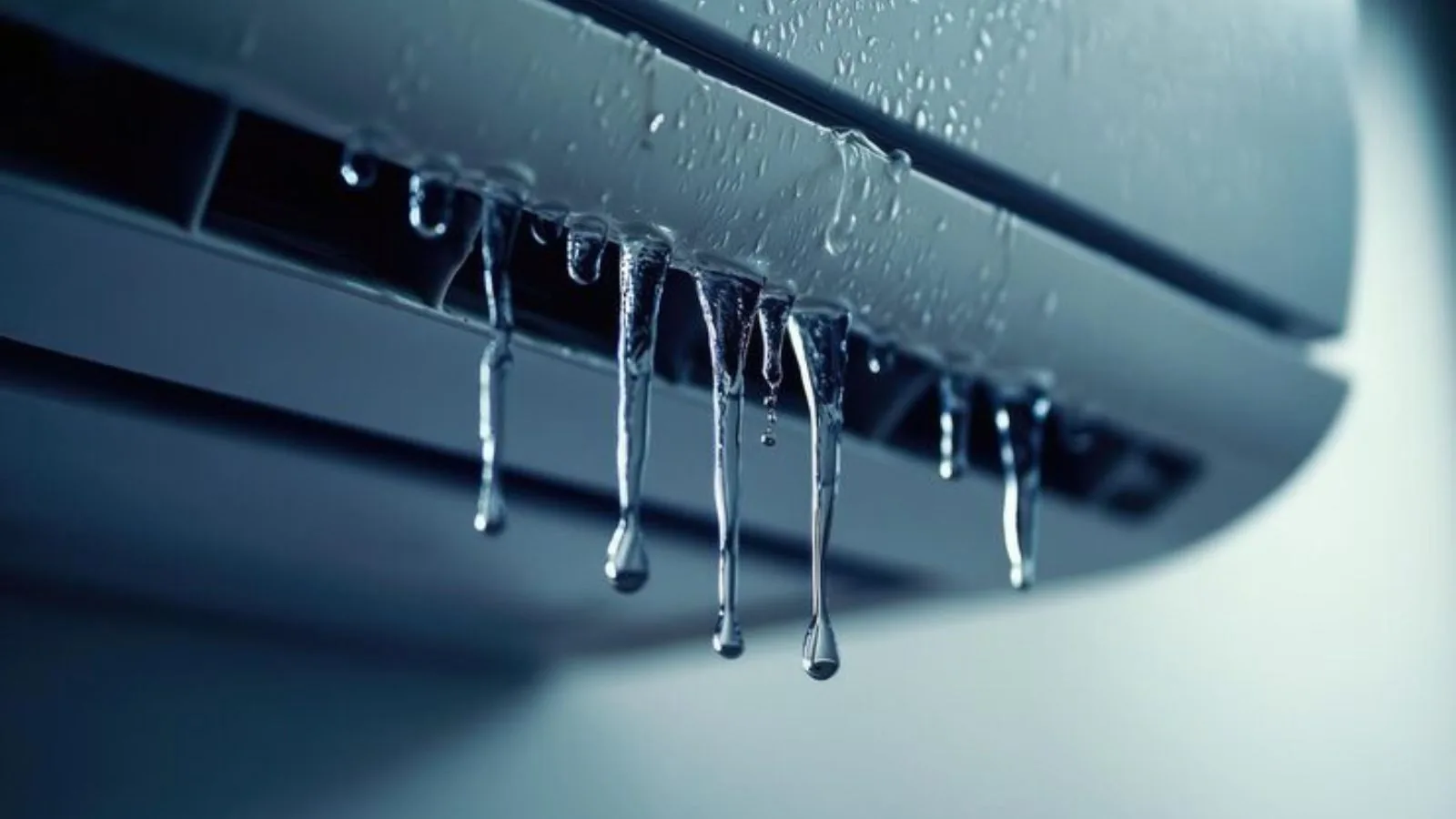
How an AC Leak Starts
Cooling air removes moisture, and that moisture drains through a condensate line. When algae or debris clogs the line, the drain pan fills and overflows into the ceiling, closet or attic floor below.
The leak is often slow, which means damage builds for days before anyone sees a stain. A musty smell near the air handler is often the first sign.
Signs of an AC Water Leak
Ceiling stain near a vent or closet
The stain follows the air handler location, not the roofline.
Water in the drain pan
A full or overflowing pan means the line is blocked.
Damp insulation or drywall
Wet material around the unit means the leak has been going on for a while.
Warped flooring near the unit
Hardwood or laminate can cup after repeated drips.
Turn off the system to stop more condensate, and have an HVAC technician clear the line. Meanwhile, we deal with the wet materials.
How We Handle AC Leak Damage
- Stop and extractWith the system off, we remove water from the pan area and floor.
- Map the moistureMeters and a thermal camera show how far water traveled.
- Dry materialsAir movers and dehumidifiers dry insulation, drywall and framing.
- DocumentWe record the damage so repair and insurance claims are straightforward.
Wet insulation near the unit is usually removed. If drywall or the ceiling is stained, our ceiling water damage page explains how those repairs are planned.
Preventing a Repeat
| Step | Who does it | Benefit |
|---|---|---|
| Clear the condensate line | HVAC technician | Removes the clog. |
| Install a float switch | HVAC technician | Shuts the unit off when the pan fills. |
| Check the pan yearly | Homeowner | Catches standing water early. |
| Keep the area dry | Homeowner | Prevents hidden damage. |
What the Assessment Looks Like
We start at the air handler and the drain pan, then follow the water into the ceiling, closet floor or attic. A moisture meter shows how far it went, and a thermal camera shows wet insulation.
You hear what is wet and what the plan is in plain words, before any work begins, and the price is explained at the same time.
Condensate Lines and Hardwood Floors
One of the more frustrating calls is hardwood that cups because a condensate line backed up near a closet. The leak is slow, the water spreads under the boards and the damage appears weeks later.
Drying the floor and fixing the line are separate jobs, and both have to be done. Ask your HVAC technician to clear the line, and ask us to check the floor. Our hardwood floor page explains what drying can save.
Attic Units and Closet Units
Where the air handler sits changes how the damage shows up. An attic unit that overflows soaks insulation and the ceiling below, and the stain appears on a hallway or bedroom ceiling.
A closet unit leaks onto the floor, so the damage tends to be flooring, baseboards and the wall base. In both cases, the leak is slow, so ask when the unit last got service.
Check the condensate drain outlet outside, if there is one. If you never see water there during hot weather, the line may be blocked.
Ceiling stain or wet closet floor?
Call the 24/7 line and describe where the water showed up. The dispatcher will explain the scope and price before work starts.
What to Do Before a Crew Arrives
These steps keep people safe and limit the loss while you wait. Do only what is safe, and skip any step that means standing in water near power.
- Stop the water at its source if you can reach the shutoff safely, and leave electrical panels alone if the floor around them is wet.
- Keep children and pets out of the wet area, since floors can be slick and standing water may carry contamination.
- Do not walk on a sagging ceiling or run a household vacuum on wet carpet.
- Move small valuables and papers to a dry room, and take photos of the damage before you move anything else.
The vocabulary used here for water categories and drying follows ANSI/IICRC S500, the published industry standard for professional water damage restoration. We name it so you can look it up, and it is a reference standard rather than a certification claim.
What Affects AC Leak Repair Cost
Duration
Weeks of slow leaking costs more than a single overflow.
Material
Insulation and drywall near the unit may need replacing.
Location
Attic units add access challenges.
Flooring
Hardwood near the closet can require extra drying.
Insurance note
Many policies cover sudden overflow but exclude long-term seepage. Keep service records, because they can show the system was maintained.
We serve all Claremore ZIP codes, including 74017, 74018 and 74019, and the nearby towns of Oologah and Inola.
Frequently Asked Questions
Can an AC leak really damage a ceiling?
Yes. A clogged condensate line can overflow into the ceiling, closet or attic floor, and repeated overflow stains drywall and soaks insulation.
Who clears the drain line?
An HVAC technician clears the line. We handle the water damage.
Is AC water damage covered by insurance?
Sudden overflow may be covered, while long-term leaks often are not. Check your policy.
What does a leaking AC smell like?
Many people notice a musty odor near the air handler or vents.