
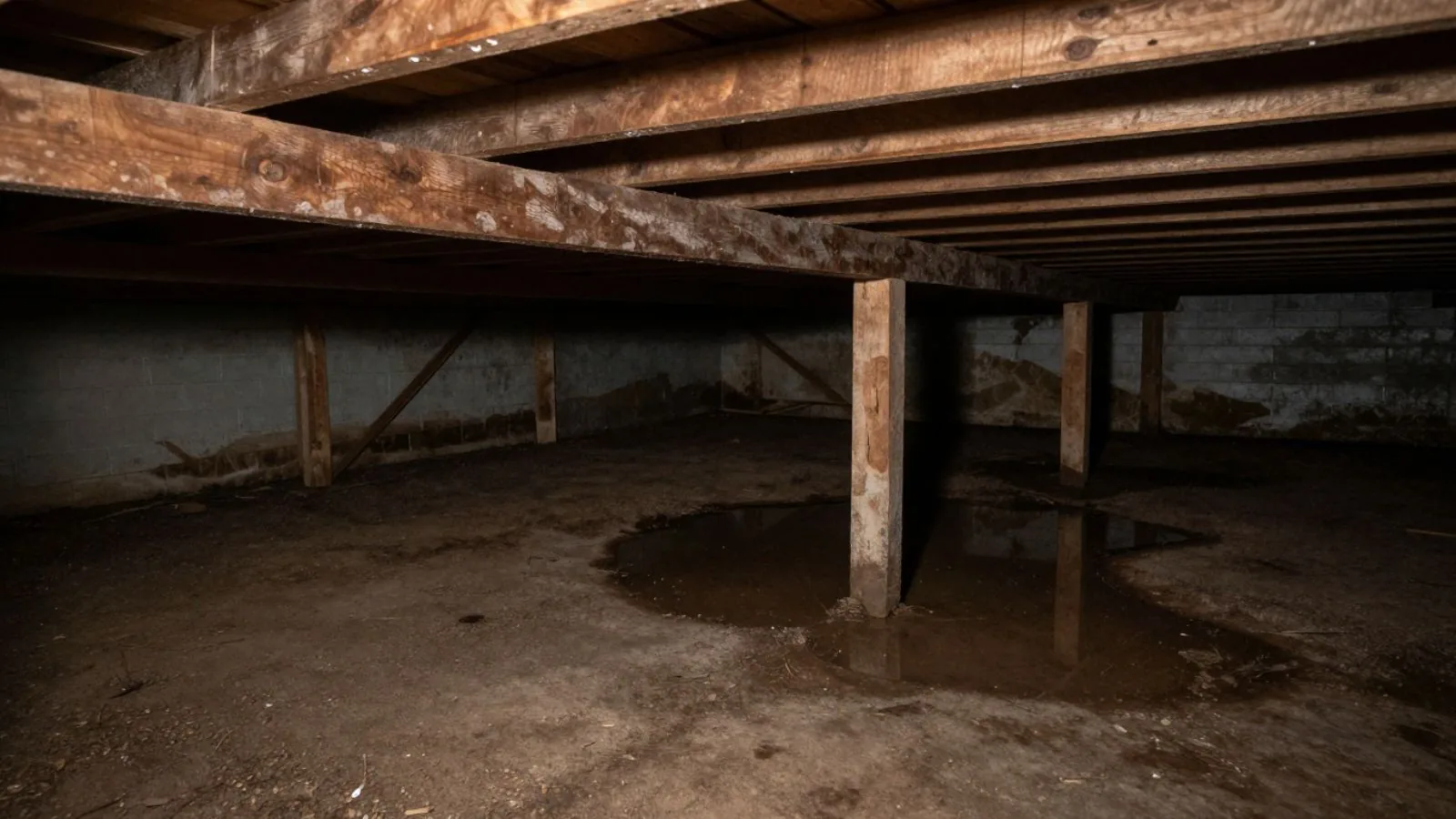
How Water Gets Into a Crawl Space
Crawl spaces take in water through foundation vents, low spots in the soil and cracks in the walls. Plumbing leaks above can drip into them, and heavy rain can send runoff straight in.
Because the space is closed and dark, water can sit for weeks before anyone looks, and what looks like a small puddle may mean wet framing above.
Rain and Runoff
In May, Tulsa's normal rainfall is 5.73 inches in the NWS 1991 to 2020 normals, the nearest long-term station. Spring downpours are when low crawl spaces collect water, and a vented crawl space lets that moisture in.
After heavy rain, check the crawl space entry if it is safe, and call if you see standing water or a wet vapor barrier.
What We Look For
Standing water
Pooled water or soaked soil under the house.
Wet insulation
Insulation that sags or drips holds water against the floor above.
Damp floor joists
Dark or swollen wood is a sign of repeated moisture.
Torn vapor barrier
Plastic sheeting that has shifted lets ground moisture rise.
How We Handle Crawl Space Water
- Pump outWe remove standing water with submersible pumps.
- Remove wet materialsSoaked insulation is bagged out of the space.
- DryDehumidifiers and air movers dry joists and subfloor.
- DocumentWe photograph and record moisture readings for your claim.
Crawl space water often traces back to plumbing, and our water extraction service explains how pump-out is staged. If the source is a pipe, a plumber fixes it.
Restoration Is Not Waterproofing
Drying a crawl space restores it to normal moisture. It does not stop water from returning. Grading, drainage and vapor barriers belong to a foundation or waterproofing contractor, and we will tell you plainly when that is the next step.
| Task | Restoration crew | Other contractor |
|---|---|---|
| Pump out standing water | Yes | No. |
| Dry joists and subfloor | Yes | No. |
| Regrade or add drainage | No | Yes. |
| Install or replace vapor barrier | Sometimes | Often. |
What an Assessment Looks Like
A technician enters the crawl space with a light, a moisture meter and a thermal camera, and notes standing water, wet insulation and the condition of the vapor barrier. Photographs are taken at each stage.
You hear in plain words what is wet, what the plan is and how the price is set before work begins. If the technician sees signs of a plumbing leak, that is reported so a plumber can be called.
A Broken Irrigation Line and Other Surprises
Crawl space water does not always come from the sky. A broken irrigation line or backflow can flood a space under a house, and so can a leaking drain or supply pipe above.
If you hear water running with everything off, or see a wet patch in the yard near the foundation, tell the dispatcher. Finding the source first saves drying time and prevents a repeat.
Insulation, Vapor Barrier and Ductwork
Many crawl spaces hold fiberglass insulation between the joists, a plastic vapor barrier on the ground and ductwork or plumbing lines. Each reacts to water differently.
Wet fiberglass insulation sags and loses its value, so it is usually removed. The vapor barrier can often be dried and put back, and ductwork needs to be checked for water inside.
Because the space is cramped, crews work with lights and limited room. Tell the technician about any entry problems, such as a narrow hatch.
Standing water under the house?
Call the 24/7 line and describe what you can see from the access panel. The scope and price are explained first.
What to Do Before a Crew Arrives
These steps keep people safe and limit the loss while you wait. Do only what is safe, and skip any step that means standing in water near power.
- Stop the water at its source if you can reach the shutoff safely, and leave electrical panels alone if the floor around them is wet.
- Keep children and pets out of the wet area, since floors can be slick and standing water may carry contamination.
- Do not walk on a sagging ceiling or run a household vacuum on wet carpet.
- Move small valuables and papers to a dry room, and take photos of the damage before you move anything else.
The vocabulary used here for water categories and drying follows ANSI/IICRC S500, the published industry standard for professional water damage restoration. We name it so you can look it up, and it is a reference standard rather than a certification claim.
What Affects Crawl Space Cleanup Cost
Access
Tight entries slow equipment and labor.
Water depth
Deeper water takes longer to pump.
Insulation
Wet insulation adds removal.
Source
A plumbing leak may be fixed first, rain intrusion may return.
Insurance note
Sudden plumbing leaks are often covered, but groundwater and seepage often are not. Ask your agent how your policy treats water that enters from outside.
We serve all Claremore ZIP codes, including 74017, 74018 and 74019.
Frequently Asked Questions
Is a damp crawl space always a problem?
A little moisture is common, but standing water or wet insulation is not. Call if you see either.
Do you waterproof crawl spaces?
No. We dry and restore. Waterproofing and drainage belong to a foundation contractor.
Is crawl space water covered by insurance?
Sudden plumbing leaks often are, but groundwater and slow seepage often are not. Ask your agent.
How long does a crawl space take to dry?
Often several days, depending on how wet the soil and framing are.