
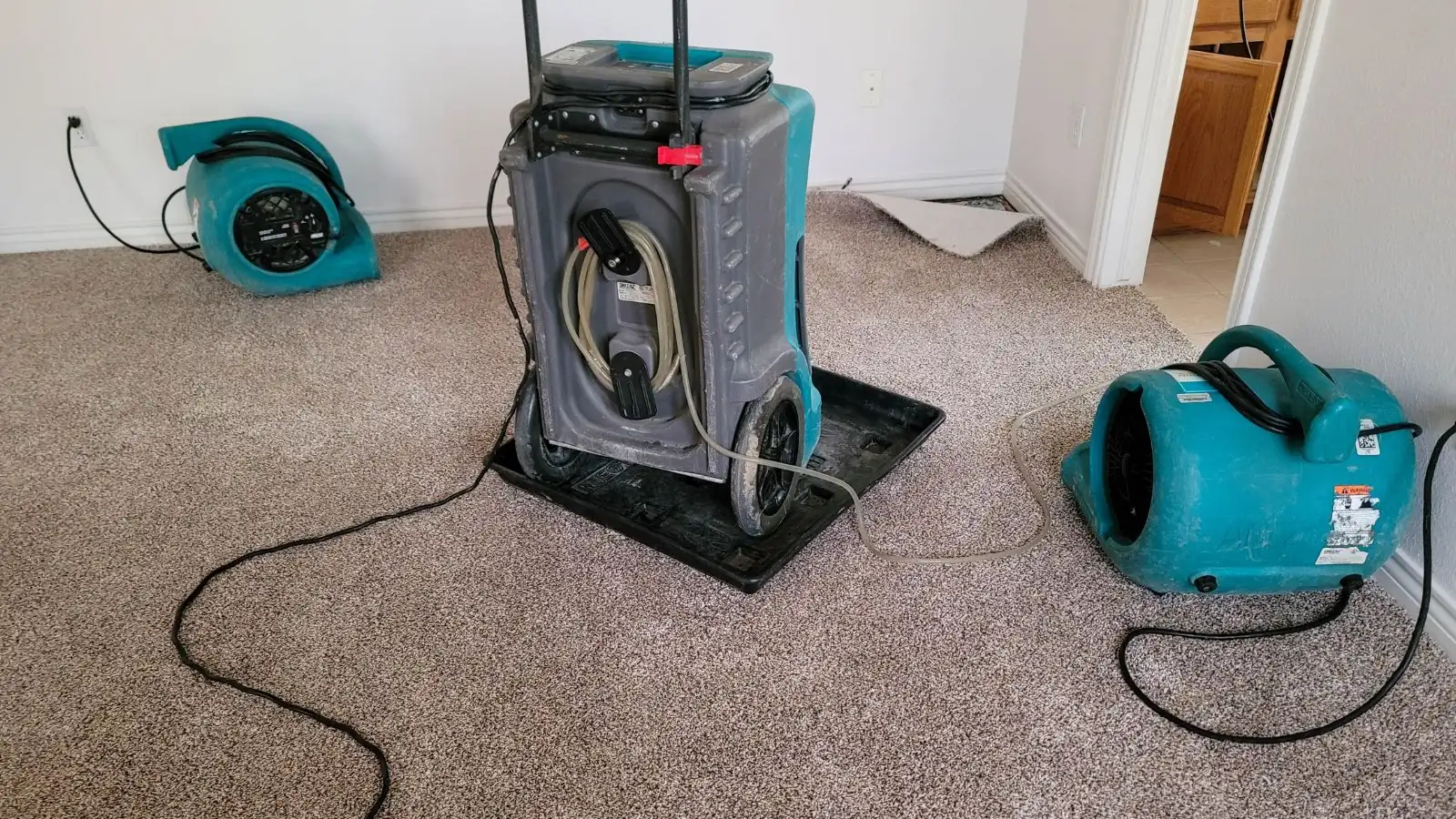
What Water Mitigation Means
Water mitigation means taking steps to stop damage from getting worse. It covers stopping the source, removing standing water and drying the structure and contents.
It is not the same as repair. Mitigation limits the damage, and repair puts the building back the way it was.
The Stages of Mitigation
- Stop the sourceShut off the supply, or isolate the failed appliance or pipe.
- Extract waterPumps and wet vacuums remove standing water.
- Remove what cannot be savedWet insulation, soaked pad or ruined drywall may be cut out.
- Dry the structureAir movers and dehumidifiers dry materials, with moisture readings recorded.
Each stage shortens the next. Water that is extracted quickly leaves less to dry, and drying that is measured leaves less to rebuild.
Why Time Matters
Water moves. It travels into drywall, under baseboards and across subfloors, and the longer it sits the more materials it reaches. Porous materials absorb it, and some begin to swell or stain within a day.
That is why mitigation should begin as soon as the situation is safe, even before a claim is filed. Taking reasonable steps to limit damage is typically expected by insurers.
Mitigation Compared With Repair
| Question | Mitigation | Repair |
|---|---|---|
| Goal | Stop damage and dry | Rebuild and refinish. |
| When | Right away | After drying is complete. |
| Typical work | Extraction, drying, removal | Drywall, flooring, paint. |
| Records | Moisture readings, photos | Invoices, finished work. |
Some companies do both, and some only one. Ask who does the repair and whether the mitigation scope covers what the rebuild needs.
What Mitigation Is Not
Mitigation is not waterproofing and not mold treatment. It does not stop water from entering a building in the future. If water keeps returning, the fix is usually grading, drainage or plumbing work from another contractor.
Our water extraction page and structural drying page show how the first two stages work in detail.
Local note: rain can arrive fast in Rogers County
The National Weather Service in Tulsa documented flash flooding on May 1, 2009, with 2 to 5 inches of rain across Rogers County by noon. Events like that turn a dry weekend into a mitigation call, so know your shutoffs and your phone numbers before the rain.
What to Do Before Help Arrives
- Stop the source if you can do it safely.
- Photograph the damage before moving items.
- Lift furniture and small valuables off wet floors.
- Keep people and pets away from wet electrical areas.
If you live in Oologah or Catoosa, the same first steps apply, and the dispatch line is open around the clock.
A Mitigation Example
Picture a washing machine hose that fails while the family is out. By the time someone comes home, an inch of water covers the laundry room and has reached the hallway carpet.
Mitigation starts with closing the valve and pulling the standing water. The crew then lifts the wet carpet and pad, dries the floor and walls and measures progress each day. Repairs, such as new pad or paint, wait until readings show everything is dry.
Common Questions About the Process
People often ask whether mitigation has to start before the insurer approves it. In general, protecting the property from further damage is something insurers expect, and documenting the work protects you. Ask your agent what your policy says.
Another common question is whether the equipment is noisy. Air movers and dehumidifiers do hum, and they run around the clock for several days, which surprises many homeowners. Plan for it, and ask the crew how many machines will run and where they will sit.
How Mitigation Records Are Used
The records from a mitigation job serve several readers at once. You use them to confirm the structure is dry, your insurer uses them to review the claim and a repair contractor uses them to see what was removed.
Ask to see the moisture readings for each visit. If the numbers keep dropping toward the dry standard, the job is working, and if they stall, the crew should explain why and what they will change.
Signs That Mitigation Is Going Well
- You can see the equipment running and the technician explains where it is placed.
- Moisture readings are taken on every visit and shared with you.
- The numbers fall toward the dry standard from one visit to the next.
- Materials removed are listed and photographed.
- You are told when the job is done and why.
If the equipment is running but nobody is measuring anything, ask what the readings are. Drying without numbers is guessing.
If readings are stuck, there may be hidden moisture, a second source or too much humidity in the room. A good crew will tell you which and change the plan.
How to Judge a Mitigation Plan
A good plan names the source, lists the equipment, explains what will be removed and says how drying will be measured. If a company cannot tell you how it will know the structure is dry, ask more questions.
You should also hear how the work is priced before it begins, so the final invoice matches the scope.
Frequently Asked Questions
Is water mitigation the same as water restoration?
They overlap. Mitigation limits and dries the damage, and restoration can include repairs that return the building to its prior condition.
How long does mitigation take?
Extraction takes hours, while drying often takes several days.
Do I need mitigation for a small leak?
If materials got wet, yes. Even a small leak can leave moisture in walls and floors.
Does insurance pay for mitigation?
Often, when the loss is covered. Check your policy and keep records.
Is mitigation different from waterproofing?
Yes. Mitigation responds to water that has entered. Waterproofing tries to keep water out.