
Start With Safety and the Source
Before you think about paperwork, stop the water if you can. Close the main valve for a pipe or appliance, and avoid wet electrical outlets. A claim for damage you could have limited is harder than one where you acted promptly.
Once the situation is safe, call your insurer or agent to report the loss. Ask what they require, since each company has its own process.
Document Before You Move Anything
The Oklahoma Insurance Department advises documenting everything with photos and video. Do that first, and capture wide shots of each room, then close-ups of stained walls, soaked floors and damaged items.
- Photograph the source of the water, such as the burst pipe or failed appliance.
- Record a slow video walk through each affected room.
- List damaged belongings with brand, age and approximate value.
- Keep damaged items until the adjuster has seen them, unless they are unsafe.
- Save receipts for emergency repairs and temporary housing.
Do not wait for the adjuster to begin protecting the property. Mitigation can start right away, as long as the damage is documented and the records are kept.
Why Drying Records Matter
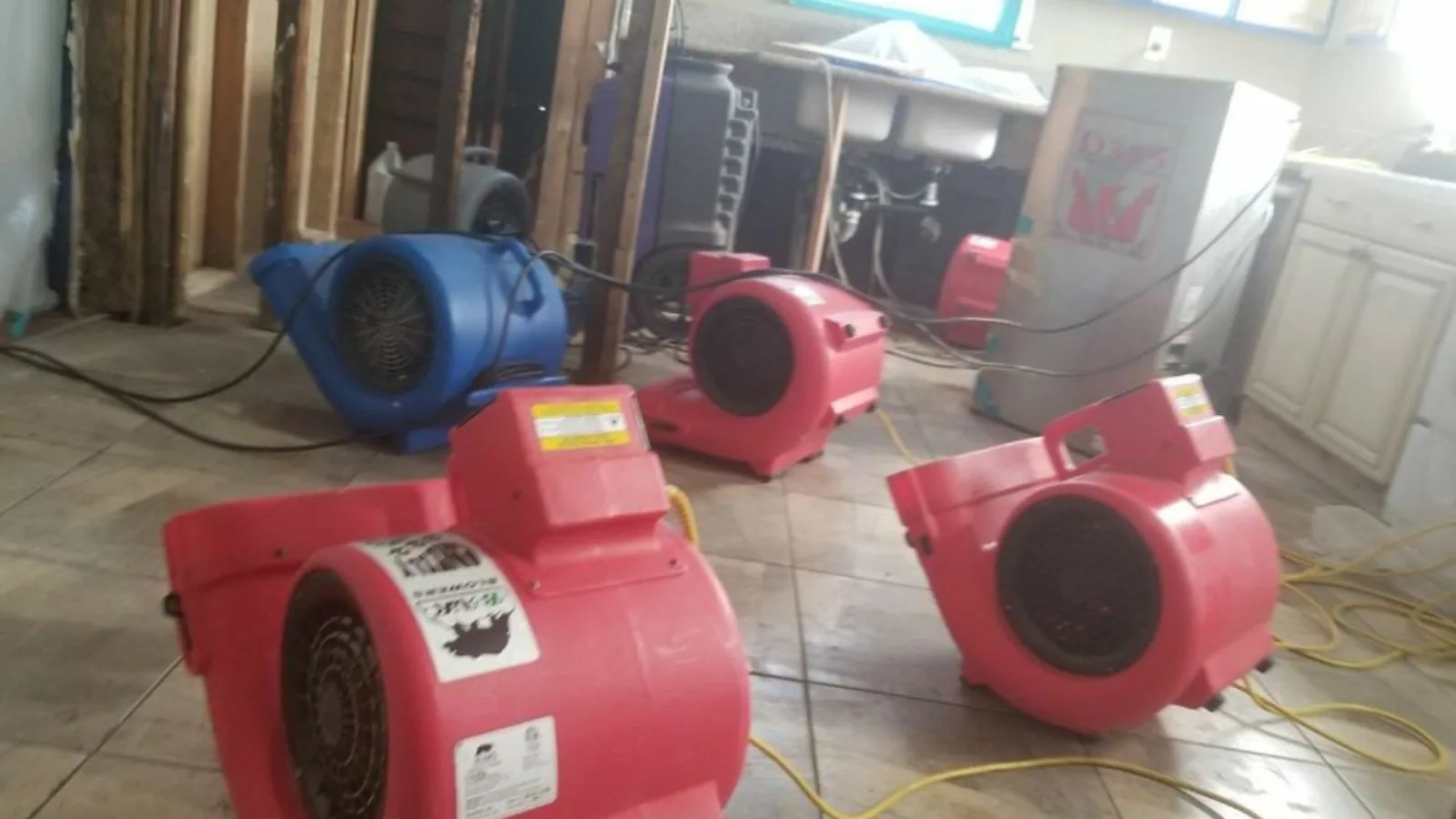
A proper drying job produces a paper trail. Moisture readings from each visit, equipment placement and a log of what was removed show how far the water traveled and when the structure was dry.
Those records let an adjuster follow the work instead of guessing at it. Our structural drying page explains the measurements we record.
| Document | Source | Purpose |
|---|---|---|
| Photos and video | You | Show the original damage. |
| Moisture readings and drying log | Restoration company | Show extent and drying progress. |
| Scope and estimate | Restoration company | List work and materials. |
| Plumber or repair invoice | Repair contractor | Show the cause was fixed. |
Pre-Existing Damage
The Oklahoma Insurance Department warns that pre-existing damage uncovered by a storm may not be covered. If a roof was already worn and a storm exposed it, an insurer may treat the damage differently than a sudden failure.
That does not mean you should avoid filing. It means you should be honest about the age and condition of what failed, and keep maintenance records if you have them.
Local note: the written record is yours
Rogers County homeowners are not required to use any particular contractor for mitigation. Keep your own copy of every photo, receipt and drying report, because your carrier may ask for them weeks later.
Working With the Adjuster
An adjuster inspects the property and prepares a repair estimate. You can share your restoration company's scope, and the adjuster may agree, adjust or ask questions about it.
Ask for the adjuster's findings in writing, and compare them to the scope you were given. If something differs, a documented drying log is often the clearest way to explain why a wall was opened or a floor lifted.
Homeowners in Inola and Collinsville deal with the same process, and our water extraction service is where documentation usually begins.
A Timeline for the First Week
On day one, stop the water, document the damage and call your insurer. Begin mitigation the same day if you can, because delay can increase the damage and complicate the claim.
Over the next few days, the adjuster inspects, the drying proceeds and you keep notes of each visit. Near the end of the week, you should have drying readings that show the structure reaching its goal and a list of what must be replaced.
Repairs usually come after drying is complete, and the repair estimate often takes longer than the mitigation. Keep every receipt, including meals or lodging if you cannot stay in the house, and ask your insurer whether those costs are covered.
Questions an Adjuster May Ask
- When did you first notice the damage?
- What caused the water, and has it been fixed?
- What have you done since to limit the damage?
- Has this area had water damage before?
- What belongings were affected, and what were they worth?
Answer plainly and stick to what you know. If you do not know the cause, say so, and let the plumber or the restoration technician provide their findings.
Keep your own notes of every conversation, including the date, the person's name and what was said. If something is promised, ask for it in writing.
Keeping Your Claim File Organized
A simple folder, paper or digital, keeps everything in one place. Put in it the policy declarations page, the claim number, photos, the adjuster's contact details and every receipt.
Add a running log with dates and short notes after each phone call. When a claim runs for weeks, the log is what keeps the story straight.
If you hire a contractor, ask for copies of everything they give your insurer. You should never be surprised by what is in your own claim.
The vocabulary used here for water categories and drying follows ANSI/IICRC S500, the published industry standard for professional water damage restoration. We name it so you can look it up, and it is a reference standard rather than a certification claim.
Common Mistakes
- Throwing away damaged items before photographing them.
- Waiting days to report the loss.
- Skipping drying and only repairing the surface.
- Assuming the policy covers everything without reading it.
Frequently Asked Questions
How soon should I report water damage to my insurer?
As soon as the situation is safe. Delay can complicate the claim and can increase the damage.
Should I start cleanup before the adjuster arrives?
Yes, begin mitigation and document first. Waiting can make damage worse.
What if my claim is denied?
Ask for the denial in writing and review your policy. You can ask your insurer to explain, and you may contact the state insurance department.
Do I need a restoration company's report?
It is not always required, but moisture readings and a scope are useful evidence.
Do you handle the claim for me?
No. Only you and your insurer handle the claim. We provide documentation of the drying work.