
Why the Age of Damage Matters
Insurers often treat sudden damage differently from damage that built up over time. A homeowner who understands what recent versus long-term damage looks like can describe the problem more accurately.
It also affects repairs. Fresh water on clean materials can often be dried, while old, repeated moisture may have rotted or stained materials beyond saving.
Signs of Recent Water Damage
Dark, damp surfaces
Materials feel wet or cool to the touch.
Fresh stains
Stain edges are soft, with no hard ring.
Active dripping
Water is still moving through the area.
Clean surrounding finish
Paint and wood nearby look normal.
Recent damage is also the best time to act. Prompt extraction and drying can keep materials from swelling or staining.
Signs of Older or Repeated Damage
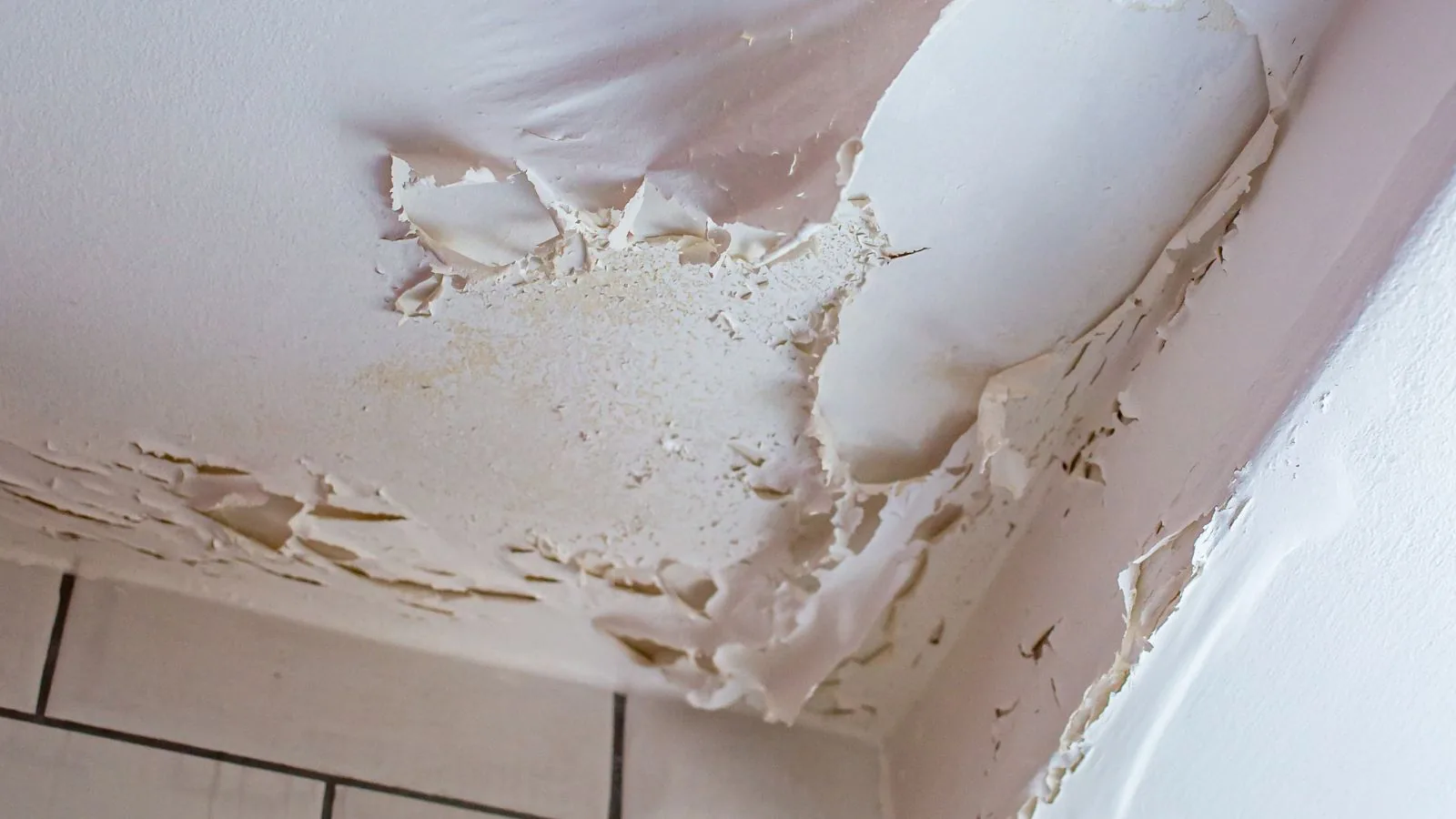
Hard-edged rings
Layered tide lines show water arrived more than once.
Crumbling or soft material
Drywall or wood has broken down.
Peeling paint and bubbling
Moisture has pushed finish off the surface for a while.
Persistent musty smell
A lasting odor suggests moisture inside the material.
These signs suggest the problem has been present longer, and a new leak may be adding to it.
How a Professional Tells
| Clue | What it suggests | Tool |
|---|---|---|
| Moisture reading | Current wetness in the material | Moisture meter. |
| Cool spots behind a wall | Active or recent moisture | Thermal camera. |
| Tide lines and layered stains | Repeated wetting over time | Visual inspection. |
| Material breakdown | Long exposure | Probing and inspection. |
A meter shows whether the material is wet now. It cannot say how old the damage is by itself, which is why technicians combine readings with visual evidence.
Local note: spring rain can leave stains that look old
Tulsa, the nearest long-term NWS station, has a normal May rainfall of 5.73 inches. A roof or window leak that appears in May and dries by June can leave a stain that looks old a few weeks later, so note the date you first saw it.
Write Down What You See
The best evidence of age is your own record. Date-stamped photos, a note of when you first noticed the stain and any plumbing or roof repairs done nearby all help.
If an insurer asks when the damage began, specific records are more convincing than recollection.
What Insurers and Buyers Look For
Home inspectors and adjusters look for the same signs you do. Stains with multiple rings, soft baseboards and a musty smell suggest repeated moisture, and fresh water suggests a recent failure.
If you are selling a home, disclose known water damage and keep repair records. If you are buying, ask for them.
A Simple Observation Log
If you find a stain, write down the date, take a photo and mark the edge of the stain with a pencil line. Check it a few days later.
If the stain grows past the line, the leak is active. If it stays put and the material is dry, it may be old. Either way, a meter reading is the better answer, and a restoration company or a plumber can provide one.
Common Misreadings
A dry stain is not always old. A recent leak can stop on its own, such as a one-time overflow, and leave a stain that dries within days.
A fresh-looking wet spot is not always new. A slow leak can keep a material damp for months, and the surface can look recent because it never dried.
That is why a single observation is rarely enough. A meter reading, a visual inspection and your own records together tell a more reliable story.
Why Old Damage Is Still Worth Fixing
Even if damage is old, it is usually worth addressing. Materials that stay damp can warp, rot and develop odors, and a leak that continues will keep adding to the problem.
Fix the source first, then dry what is wet, then repair what cannot be saved. Skipping the first two steps means repairs will not last.
If you are not sure whether a leak is still active, a few days of observation and a meter reading will tell you. Mark the stain, check it and call if it changes.
Photographs That Help
Take pictures in good light, with a coin or ruler in frame for scale. Shoot the stain straight on and from an angle, and take a wider shot that shows where it sits in the room.
The vocabulary used here for water categories and drying follows ANSI/IICRC S500, the published industry standard for professional water damage restoration. We name it so you can look it up, and it is a reference standard rather than a certification claim.
What to Do If You Find Old Damage
- Find and fix the source, or the damage will continue.
- Photograph and date the damage.
- Have the area checked with a moisture meter.
- Ask a professional whether materials can be dried or must be replaced.
- Talk to your agent before assuming coverage.
Our wall and drywall page explains how wet walls are evaluated, and our ceiling page does the same for stained ceilings.
Homeowners in Catoosa and Inola can call for an assessment, and the dispatcher will explain how it works.
Frequently Asked Questions
Can a stain tell me exactly how old damage is?
No. Stains give clues, but readings and records are more reliable.
Does a dry stain mean the problem is over?
Not necessarily. The source may still be active, and the material may have moisture inside.
Can I paint over an old stain?
Not until the source is fixed and the material is dry, or the stain returns.
Does old damage affect insurance?
It can. Gradual damage is often excluded, so ask your agent.
Who can confirm the cause?
A plumber, roofer or restoration technician, depending on the source.