
What You Can Probably Handle
A small amount of clean water on a hard floor, wiped up quickly, is a normal household event. If it did not reach walls, carpet or cabinets, towels, a mop and a fan are usually enough.
Open windows if the weather is dry, and check the spot again the next day.
Where the Line Is
| Situation | DIY reasonable? | Why |
|---|---|---|
| Small clean spill on tile | Yes | Water did not reach hidden materials. |
| Wet carpet over a larger area | No | Pad and subfloor hold moisture. |
| Water in a wall or ceiling | No | Hidden moisture needs readings. |
| Sewage or flood water | No | Health risks and contamination. |
| Water that sat over a day | No | Materials may already be damaged. |
The common thread is hidden moisture. If you cannot see all the wet areas, you cannot be sure they are dry.
Why Fans Alone Fall Short
Fans move air, but they do not remove moisture from it. In a humid room, air that is already full of moisture will not dry materials well.
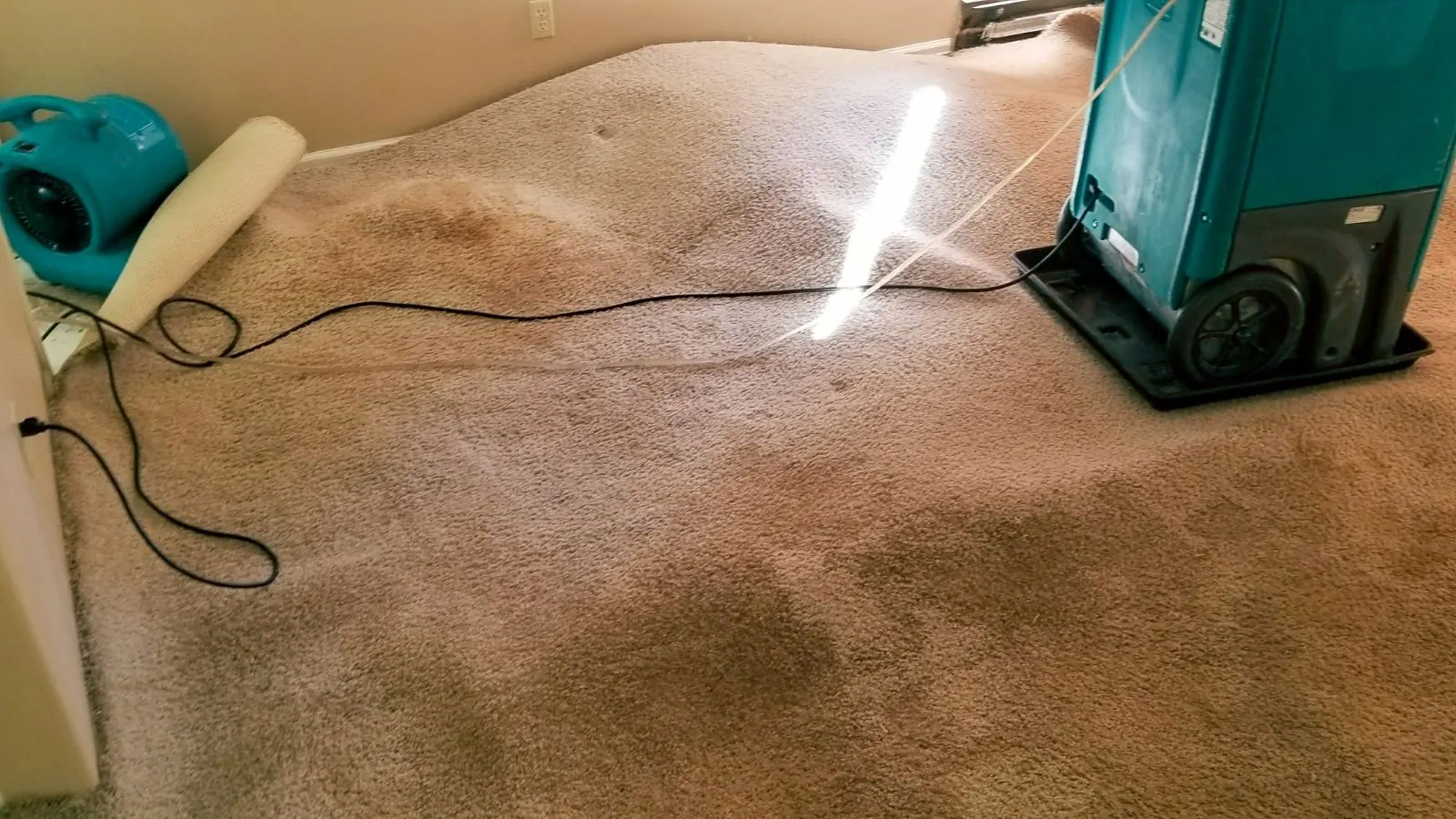
Dehumidifiers and air movers work together, and moisture meters tell you when to stop. Our structural drying page explains the process.
Risks of Guessing
- Moisture left in walls can cause swelling and staining.
- Wet subfloor can warp flooring.
- Odors can develop in carpet and pad.
- Delay can raise repair costs and complicate an insurance claim.
Safe Steps Anyone Can Take
- Stop the source of the water.
- Keep power away from wet areas.
- Remove small items and furniture from the water.
- Photograph the damage.
- Call a professional if you are unsure.
Sandbags are a tool for keeping outside water out, not for drying a room. They can help at doors and low openings before a storm.
Local note: spring storms test your preparation
NWS Tulsa documented flash flooding on May 1, 2009, with flooding photographed in Claremore along Highway 66. If you live in a low area, keep sandbags or barriers ready and know which doors let water in first.
A Cost Comparison in Plain Words
Doing it yourself seems cheaper, and for a small spill it is. For a larger loss, the cost of replacing materials that stayed wet can exceed the cost of professional drying.
The risk is asymmetric. If you call a professional for a spill you could have handled, you spend some money. If you skip a professional for a loss you could not handle, you may pay for damage that spreads behind walls and under floors.
What to Ask Before You Decide
- Did the water touch anything other than the floor?
- Was it clean water, and can I be sure?
- Has it been more than a day?
- Can I see every wet area?
- Would I be comfortable explaining my drying plan to an insurer?
If any answer is no, call. The dispatcher can tell you whether a visit is worthwhile.
Signs That a DIY Job Is Not Working
If the room still smells musty after a few days, the carpet feels cool or the baseboards are swelling, moisture is still present. Another sign is a wall that looks dry but feels cold to the touch.
At that point, stop and call. Continuing to run fans can dry the surface while moisture sits inside, and the longer it stays, the more it costs.
A professional can take readings in a few minutes and tell you whether the structure is dry or whether it needs more work.
Keeping Records Either Way
If you dry something yourself, keep a note of what happened, what you did and when. Photograph the area before and after, and keep receipts for any supplies.
Those records help if you need to make a claim later or if the same area becomes a problem again. They are also useful if you sell the home.
If you decide halfway through that you need help, the notes you have taken give the technician a head start.
The Role of Time
Time is the quiet factor in every water loss. A spill that you handle within the hour is much less likely to cause lasting damage than one that sits until tomorrow.
If you cannot reach every wet area in that window, or if you are unsure what the water touched, a professional visit buys certainty. The earlier it happens, the less there is to dry.
The vocabulary used here for water categories and drying follows ANSI/IICRC S500, the published industry standard for professional water damage restoration. We name it so you can look it up, and it is a reference standard rather than a certification claim.
Equipment You Should Not Improvise
Household vacuums are not designed for water, and extension cords near wet floors are dangerous. If you need to run equipment, use a GFCI outlet and keep cords out of standing water.
For floods or sewage, protective equipment matters more than speed, which is why professionals handle those. See our flood damage page and carpet page for specifics.
If you are in Oologah or Catoosa and unsure, call, and the dispatcher will help you judge.
Frequently Asked Questions
Can I dry a wet carpet myself?
For a small area of clean water caught immediately, you may be able to. Pad and subfloor often need professional drying.
Are box fans enough?
For a thin spill, they help. For wet walls, floors or carpet, dehumidification is needed too.
How do I know it is dry?
A moisture meter reading compared to a dry reference. Touch alone is not reliable.
Is it safe to use a household vacuum on water?
No. Use a wet-dry vacuum, with a GFCI outlet.
What should I never do?
Do not enter standing water near power, and do not touch sewage.